
One mark of a hero is being born under mysterious circumstances. One of the strangest examples is Perseus who was born when drops of liquid gold fell on his imprisoned mother Danae. Several years later, Perseus was grown up, and a cruel king tricked him into undertaking an impossible task – to bring back the severed head of a terrible monster living. To be successful, Perseus would need a little help from the gods Hermes and Athena, and some divine treasures.
Episode 35: Pelops
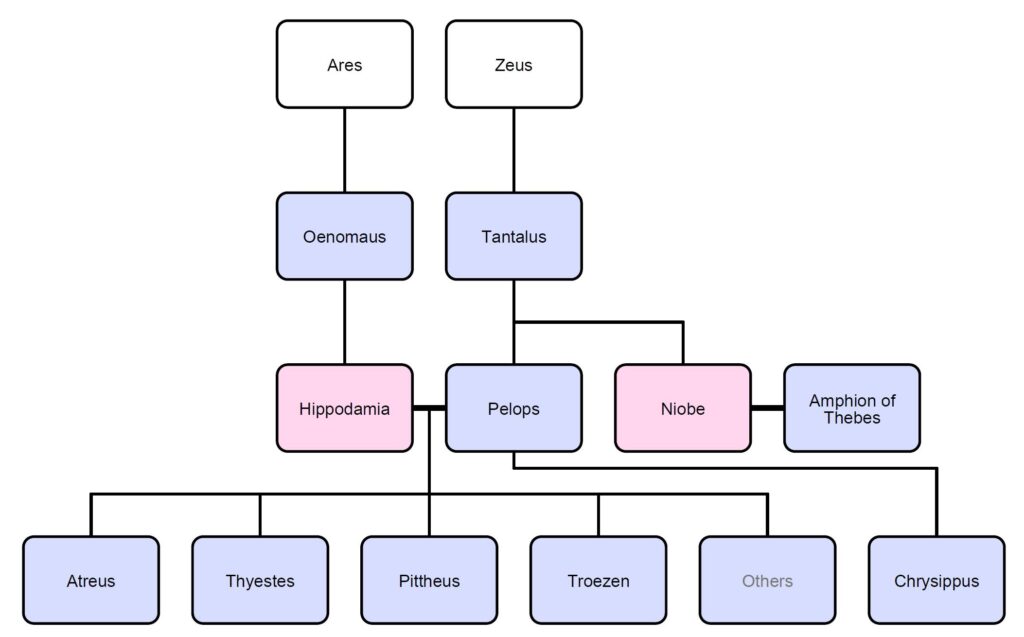
This episode covers the dark and chilling tales of the Greek hero Pelops. First I cover his father Tantalus, how he dared to challenge the gods and how a father’s embrace turned deadly. Afterwards, I explore an adult Pelops’ challenges as a suitor for the beautiful Hippodamia, and the thrilling chariot race that determined her fate. But did the cunning hero use only his skill, or did some trickery grant him the upper hand?
Episode 34: Sisyphus & Autolycus
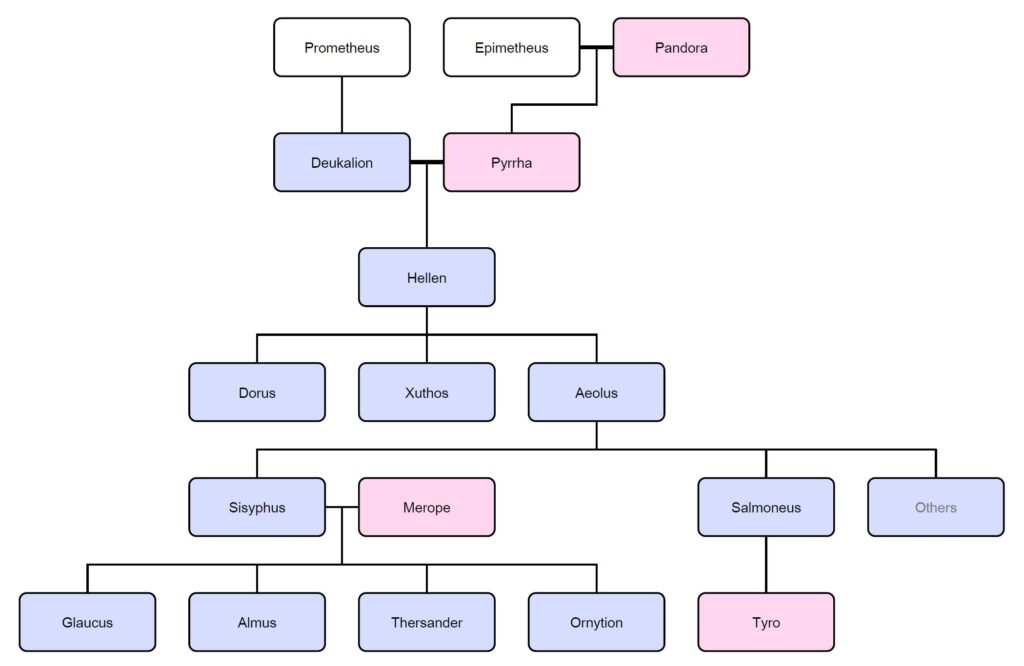
What happens when two cunning Greek tricksters cross paths and become entwined in each other’s tales? In this episode I cover Sisyphus and Autolycus (and also a third troublemaker named Erysichthon). These two are considered heroes due to their descent from gods. But they sure aren’t “good guys”, often relying on lies and tricks to get what they want. Even if that means trying to cheat death itself.
Episode 33: Antiope, Amphion & Zethus
In this episode I continue the discussion on the city-state of Thebes in Greek mythology, focusing on the kings who succeeded Cadmus. The most dramatic story is about the princess Antiope and her twin sons, Amphion and Zethus. These heroes were credited with building the magnificent walls and seven gates of Thebes. But their triumphs were also ruined bythe gods’ wrath, which led to the tragic end of their families.
Throughout, I provide historical and cultural context for Thebes, including its significance as a powerful kingdom in ancient times. The episode includes a lot of names and genealogy, so I’ve made a family tree available on the podcast website.

Episode 32: Cadmus & The Founding of Thebes
Many Greek heroes are responsible for founding a city or being the ancestral head of some powerful dynasty of later heroes. This episode focuses on Cadmus, who arrives in Greece while searching for his missing sister. He goes on to found the city of Thebes after killing a serpent dragon and marries Harmonia, an immortal daughter of the gods Ares and Aphrodite. I also discuss how their children went through a series of tragedies, most of which were due to offending the gods.

Episode 31: The Age of Heroes
Most people are familiar with names of the more important Greek heroes – ones like Achilles, Oedipus, Hercules, and Theseus. But the Greeks had myths telling the adventures of many different heroes, all living in an Age of Heroes. This episode is an introduction to the Age of Heroes as a whole. The following episodes will each focus on the individual heroes. In this episode, I also cover how the ancient Greeks explored their own past with their myths and how the legendary Age of Heroes can be treated as a fantasy version of Mycenaean Greece.
Episode 30: Did the Hittites Influence Greek Myth?
This is the final episode in the latest series on Hittite myths. Careful listeners of the past seven episodes were perhaps reminded of things from the previous Greek myth episodes. In this episode, I go back and discuss a few of those similarities between the different Mediterranean mythologies.
Episode 29: Kumarbi Cycle Part 3 – The Song of Ullikummi
This episode covers yet another attempt by Kumarbi to remove Teshub from power. Kumarbi orchestrates the birth of a son named Ullikummi, a monster made of stone who continually grows larger. This myth is considered the last instalment of the Kumarbi Cycle.
Episode 28: Kumarbi Cycle Part 2 – The Rivals of Teshub
This episode continues with myths from the Kumarbi Cycle. While the storm god Teshub is now king in heaven, Kumarbi is still around, and instigates fighting between Teshub and several rivals. Some of these include LAMMA, an arrogant god; Kiase, the sea god and close ally of Kumarbi; and Hedammu, a monstrous sea serpent.
Episode 27: Kumarbi Cycle Part 1 – Father of the Gods
This episode kicks off a three-part retelling of a wacky series of myths called the Kumarbi Cycle. These myths, while important to the Hittites, were originally Hurrian. The stories revolve around two groups of gods fighting for power over the universe. The first part tells how Kumarbi took the throne and fathered a younger generation of gods.